
Equipment overview

Lost Foam Casting Equipment

Lost foam casting equipment covers several connected steps rather than one standalone machine. OC Technology supplies equipment for EPS bead preparation, pattern molding, white-area support, pattern drying, and yellow-area coating handling.

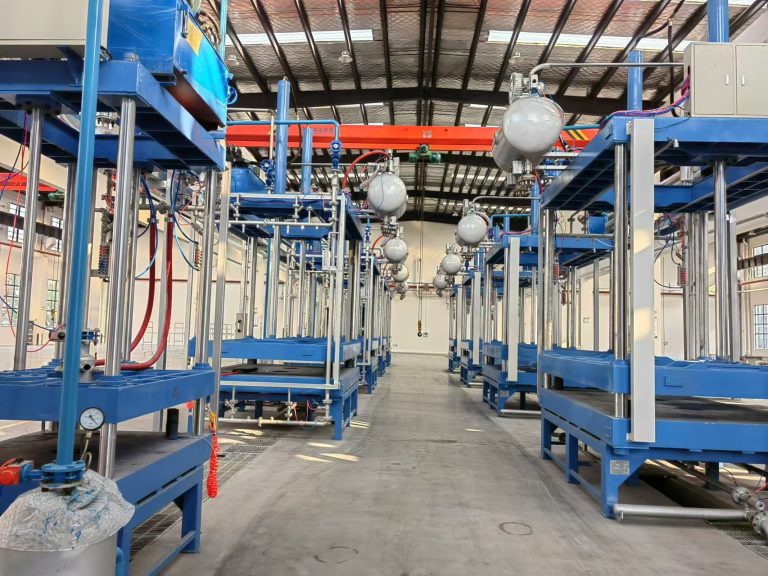
Lost foam pattern molding equipment in a production workshop
Lost foam pattern molding equipment in a production workshop.
Page focus

Plan the equipment around the pattern-making sequence.

The condition of expanded beads affects pattern molding. Pattern dimensions and coating condition affect the drying load. Vacuum, utilities, conveying, and operator movement also have to fit the line layout.

A useful discussion starts with the castings, pattern sizes, planned output, factory conditions, and the process already in place. The result may be one machine, a connected equipment group, or a staged upgrade.

Working brief
  • 01EPS raw material, pattern geometry, and production rhythm
  • 02Steam, compressed air, water, power, and floor space
  • 03Existing equipment that will remain in the production flow
  • 04Handoffs between molding, drying, and coating work
01

White-area equipment for foam pattern preparation

White-area work prepares the expendable foam pattern before coating and mold filling. The usual sequence includes bead pre-expansion, material aging and conveying, pattern molding, cooling, and conditioning.

OC Technology offers pre-expanding and EPS shape molding equipment together with related aging, vacuum, and drying arrangements. Current machine size, automation level, and utility demand are matched during technical review.

  • EPS pre-expander machines
  • Material aging and conveying arrangements
  • Vertical or horizontal EPS shape molding machines
  • Central vacuum support for molding and cooling
  • Pattern drying rooms with top, rear, or indoor layouts
02

Yellow-area coating handling

After patterns are formed and conditioned, refractory coating has to be mixed, maintained, applied, and dried. This is the yellow-area portion covered by the current OC Technology supply scope.

The equipment can combine a dispersing mixer with a dipping or holding arrangement. Coating formulation, viscosity targets, pattern handling, and batch volume remain process inputs supplied by the foundry or its coating specialist.

03

The current supply boundary

Black-area pouring, sand handling, flask movement, shakeout, and reclamation equipment are not part of the current offer. They still matter when a whole line is planned because their interfaces affect space, timing, and material flow.

Those downstream requirements can be recorded during project review, but the proposal will separate OC Technology equipment from third-party or customer-supplied systems.

Common questions

Questions buyers often raise early.

Can one machine be added to an existing lost foam line?

Yes. Existing utilities, upstream material condition, downstream demand, available footprint, and control interfaces need to be documented before the replacement or upgrade configuration is selected.

What information is needed for an initial proposal?

Useful inputs include pattern drawings, material type, target output, shift plan, current process steps, factory layout, and available utilities. Photos or a simple line sketch also help identify access and maintenance constraints.

Does OC Technology supply black-area equipment?

No. The current offer covers white-area foam pattern equipment and yellow-area coating handling. Pouring, sand handling, flask systems, shakeout, and other black-area equipment should be planned separately.

Project discussion

Bring the line conditions, not just a machine name.

Share the casting type, target output, available utilities and current process. That makes the first technical review more useful.

Form delivery is provided by Web3Forms. Submitted details are forwarded to the OC Technology inquiry mailbox.